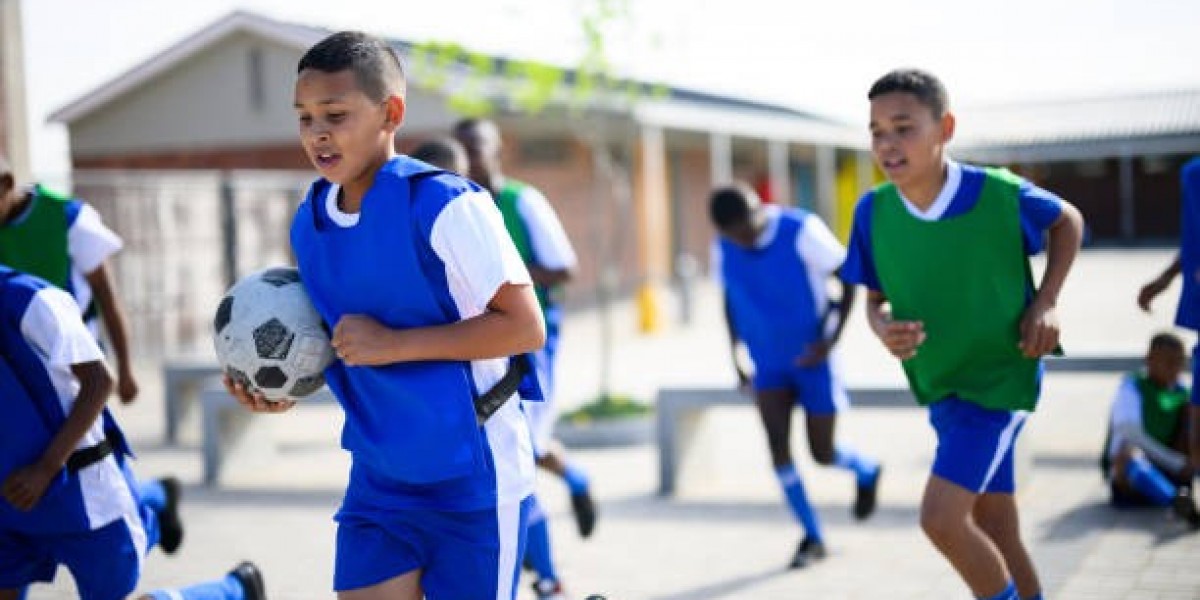

Introduction: Enhancing Skills at a Football Academy in Dubai
A Football Academy in Dubai provides children with opportunities to develop their skills in a structured environment, but the incorporation of futsal into training programs can elevate their abilities to a whole new level. Futsal, a fast-paced, small-sided version of football, emphasizes ball control, quick thinking, and tactical awareness, making it an ideal tool for shaping smarter and more technically proficient young players. While traditional football training focuses on endurance and positional play on a larger pitch, futsal concentrates on precision, creativity, and mental agility, preparing children to perform at higher levels both on and off the field.
The Small-Sided Game Advantage
Futsal is typically played on a smaller court with fewer players, which dramatically increases the number of touches each child has on the ball. This intensity accelerates skill development, allowing young players to practice dribbling, passing, and receiving under constant pressure. In a football academy setting, coaches observe that children exposed to futsal become more confident with the ball, make quicker decisions, and develop better spatial awareness. The smaller playing area requires children to think ahead, anticipate opponents’ movements, and position themselves advantageously, fostering cognitive skills that translate directly to traditional football matches.
Improved Technical Skills and Ball Mastery
One of the most significant benefits of futsal is its impact on technical skill development. The tight spaces and fast pace demand precision in passing, control, and movement. Young players learn to master intricate dribbling techniques, refine their first touch, and execute rapid, accurate passes. Unlike standard football, where a misstep may go unnoticed due to a larger field, futsal punishes errors immediately, teaching children to maintain focus and improve consistency. Over time, these technical refinements carry over to larger pitches, giving players a level of skill and confidence that sets them apart in competitive football environments.
Encouraging Creativity and Problem-Solving
Futsal encourages children to think creatively and adapt to unpredictable situations. The constant action requires them to assess multiple options quickly, choose the most effective solution, and execute it under pressure. In a youth football academy, coaches often highlight that players trained in futsal develop an enhanced ability to improvise, make intelligent runs, and exploit spaces on the field. These problem-solving abilities are essential not only in sports but also in everyday life, as children learn to process information rapidly, weigh alternatives, and make confident decisions in dynamic environments.
Enhanced Decision-Making Skills
Decision-making is a cornerstone of leadership and intelligent play in football, and futsal accelerates this development. In the confined spaces of the court, players are forced to make split-second choices regarding passing, shooting, or dribbling. Every touch counts, and hesitation can result in losing possession. By repeatedly navigating these high-pressure situations, children improve their judgment and anticipation. Over time, they develop an instinctive understanding of when to act, when to hold the ball, and how to read the game skills that are invaluable for traditional football and future competitive play.
Quick Thinking and Mental Agility
Futsal’s rapid pace demands mental sharpness. Children must constantly monitor teammates, opponents, and the ball while planning their next move. This heightened awareness fosters mental agility and reflexes, helping players respond faster to changing situations on the pitch. At a Football Academy in Dubai, coaches note that futsal-trained players often display superior game intelligence, as they can adapt strategies in real time, predict opponents’ actions, and coordinate complex team movements effectively. The mental workout provided by futsal strengthens not only tactical understanding but also resilience and focus.
Improved Physical Conditioning
While futsal emphasizes technique and cognition, it also contributes to physical conditioning. The smaller court and high-intensity nature of the game require constant movement, quick accelerations, and rapid changes of direction. Children develop agility, balance, and endurance while refining their technical skills. This combination of cognitive and physical demands results in athletes who are not only smarter in decision-making but also capable of executing actions with precision and speed. Such conditioning prepares young players to excel in traditional football matches, where stamina and agility are equally important.
Better Coordination and Motor Skills
Futsal helps children refine coordination and develop fine motor skills crucial for advanced football techniques. Controlling a smaller, heavier ball on a smooth surface requires accuracy and balance. The repetitive practice of dribbling, passing, and shooting in tight spaces enhances neuromuscular coordination, allowing children to execute complex movements instinctively. By honing these skills, futsal-trained players are more comfortable handling the ball under pressure, performing feints, and maintaining control in crowded situations, all of which improve overall football performance.
Teamwork and Communication
Even though futsal involves fewer players, it amplifies the need for communication and cooperation. Children must coordinate effectively, call for passes, and anticipate teammates’ movements. The small-sided nature ensures that every player has a critical role, emphasizing accountability and collective responsibility. These lessons in teamwork and communication are vital components of leadership, as young athletes learn to support one another, manage group dynamics, and inspire peers through positive interaction and strategic collaboration.
Futsal and Tactical Awareness
Tactical understanding is often accelerated in futsal due to the high frequency of situations that require strategic thinking. Children learn to read patterns, adjust positions, and exploit weaknesses in opponents’ formations. Coaches in Dubai’s top football academies often integrate futsal to complement tactical training, helping young players visualize and anticipate scenarios before encountering them in larger football matches. This early exposure to tactical reasoning fosters smarter play, as children develop both the technical ability and the cerebral approach needed for higher-level competition.
Confidence Building and Risk-Taking
Futsal nurtures confidence by giving children the freedom to experiment with new moves and take calculated risks. The fast pace encourages creativity, allowing players to attempt dribbles, passes, and shots they might shy away from in traditional football. Successful execution reinforces self-belief, while learning from mistakes teaches resilience. Over time, this combination of creativity and confidence produces players who are bold, adaptable, and willing to take initiative traits that are hallmarks of leadership both on and off the pitch.
Inclusivity and Adaptability
Futsal’s small-sided format makes it accessible to children of varying abilities, creating a supportive environment for learning. Players must adapt to different teammates, opponents, and styles of play, promoting flexibility and cultural awareness in a multicultural city like Dubai. By navigating these diverse interactions, children develop interpersonal skills, adaptability, and the ability to thrive in varied social and sporting contexts. Such adaptability is critical for young athletes, as it prepares them to handle dynamic situations and embrace challenges with composure.
The Long-Term Impact on Football Development
Children who participate in futsal from an early age often show noticeable improvements when transitioning to full-sized football. Their refined technical abilities, heightened decision-making skills, and enhanced mental agility provide a competitive edge. Academies in Dubai report that futsal-trained athletes are more versatile, capable of adapting to different positions, and effective under pressure. The cumulative effect of these skills not only makes children smarter footballers but also equips them with leadership qualities, resilience, and a deeper understanding of the game that will benefit them throughout their athletic journey.
Parental Engagement and Support
Parents play an essential role in maximizing the benefits of futsal training. By encouraging practice, attending matches, and providing constructive feedback, parents reinforce the lessons learned during training. In collaboration with coaches, parents help children appreciate the value of persistence, teamwork, and creativity. This combined support ensures that children internalize the technical, tactical, and psychological skills acquired through futsal, laying the foundation for well-rounded development.
Conclusion: Futsal as a Pathway to Smarter Footballers
Futsal is not merely a variation of football; it is a powerful training tool that enhances technical skills, cognitive abilities, and leadership qualities in young players. Through small-sided games, rapid decision-making, creative problem-solving, and constant engagement, children develop into smarter, more confident, and technically proficient footballers. At a Football Academy in Dubai, integrating futsal into regular training programs provides young athletes with an advantage that extends far beyond the pitch. It fosters intelligence, agility, creativity, and resilience, transforming children into versatile players and future leaders capable of excelling in sports and in life.