
In the high-stakes realm of aerial combat, seeing first and striking with precision is the ultimate advantage. The critical technology enabling this capability is the airborne fire control radar (FCR), a sophisticated sensor system that serves as the primary eyes and targeting computer for modern fighter aircraft. As global air forces modernize their fleets and geopolitical tensions underscore the need for air superiority, a new generation of advanced, electronically scanned radars is emerging, driving a significant wave of technological innovation and strategic procurement worldwide.
According to Straits Research, the global airborne fire control radar sector was valued at USD 3.24 billion in 2024 and is expected to grow from USD 3.43 billion in 2025 to reach USD 5.51 billion by 2033, growing at a CAGR of 6.10% during the forecast period (2025-2033). This steady and robust growth is propelled by the retirement of legacy systems, the integration of radars on new unmanned platforms, and the relentless pursuit of technological edge to counter increasingly advanced threats.
Key Players and Strategic Advancements
The landscape is dominated by established defense primes, each vying for lucrative modernization contracts. In the United States, Northrop Grumman and Raytheon Technologies (RTX) are the foremost innovators. Northrop Grumman's APG-83 Scalable Agile Beam Radar (SABR), an Active Electronically Scanned Array (AESA) system, continues to see widespread adoption. A key recent update is its selection for the F-16V upgrade program for numerous international air forces, including a recent contract with a European nation, highlighting the global shift towards AESA technology for 4th-generation fighter retrofits.
Raytheon (RTX), meanwhile, is progressing with its next-generation systems for the F-15 and F/A-18 platforms. Their APG-82(v)1 radar for the F-15E Strike Eagle and the APG-79(v)4 for the Super Hornet represent the cutting edge, offering enhanced reliability, greater detection ranges, and superior electronic warfare capabilities. Recent news from RTX focuses on enhancing the software-defined capabilities of these systems, allowing for new features and threat countermeasures to be added via software updates without requiring hardware changes.
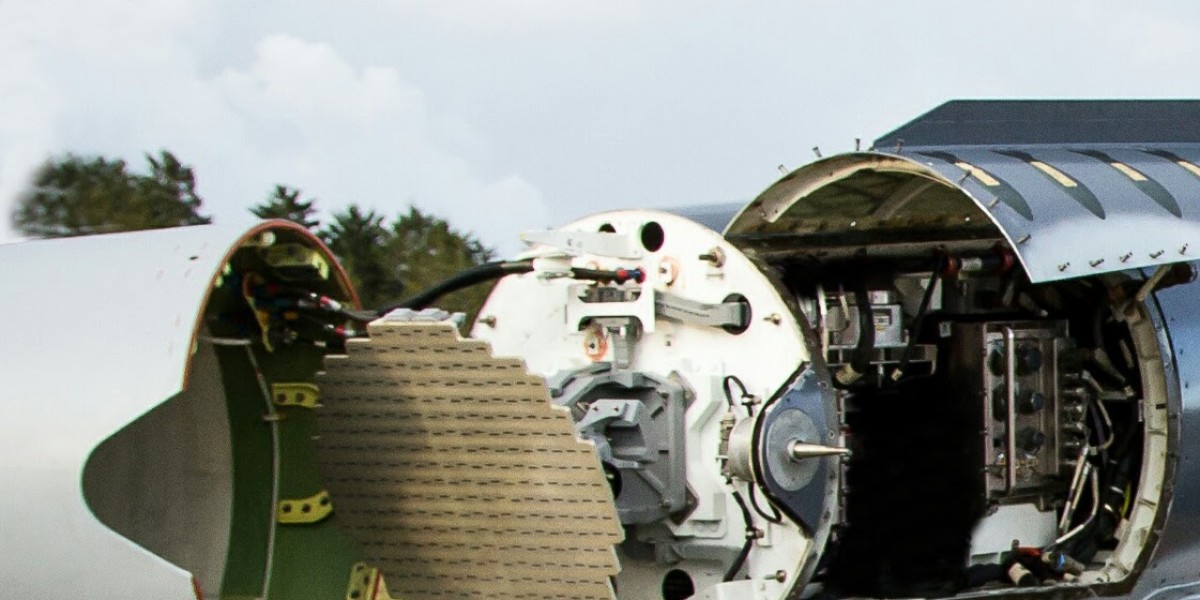
In Europe, the consortium Leonardo S.p.A. (Italy) and MBDA are key players. Leonardo's Raven ES-05 AESA radar, designed for the Gripen E/F fighter, is a standout with its unique rotating array that provides an exceptionally wide field of view. Recent developments indicate Leonardo is pitching advanced derivatives of this technology for the Eurofighter Typhoon's upgrade program, positioning itself as a strong European alternative to US offerings.
From Asia, Mitsubishi Electric (Japan) is making significant strides with its HPS-106 AESA radar for the Mitsubishi F-2 fighter. In a major recent update, Japan has approved the development of a successor, a more powerful and sophisticated AESA radar destined for the next-generation F-X fighter program, signaling a long-term commitment to indigenous radar technology development.
Emerging Trends and Technological Shifts
The evolution of fire control radars is guided by several key trends. The most significant is the complete transition from older mechanically scanned arrays to Active Electronically Scanned Arrays (AESA). AESA radars offer myriad advantages: they are harder to detect and jam, can track multiple targets simultaneously, and can perform other functions like electronic attack and high-bandwidth communications concurrently with radar tracking.
Secondly, the development of GaN (Gallium Nitride)-based transmitter modules is a game-changer. GaN technology allows for radars that are more powerful, more efficient, and have a longer range than previous systems relying on Gallium Arsenide (GaAs). This material advancement is becoming the new standard in next-generation radar systems across the board.
Finally, the concept of sensor fusion is paramount. Modern radars do not operate in isolation. Their data is fused in real-time with inputs from Infrared Search and Track (IRST) systems, electronic support measures (ESM), and off-board data links to create a single, integrated, and resilient air picture, ensuring situational awareness even in heavily contested electromagnetic environments.
The Unblinking Sentinel
The advancement of airborne fire control radar technology remains a critical pillar of national defense strategies. As platforms evolve to include unmanned loyal wingmen and sixth-generation fighter concepts, the radar will continue to be the central sensor, evolving into a multi-function "system of systems." The consistent financial investment in this sector underscores its indispensable role in maintaining aerial superiority and ensuring that pilots have the decisive edge in any engagement.
In summary: Airborne fire control radars are rapidly advancing with AESA and GaN technology at the core. Global players like Northrop Grumman, Raytheon, and Leonardo are securing key modernization contracts worldwide. This evolution is critical for achieving air superiority in modern contested environments.